New Orleans Legendary Walking Tours logo
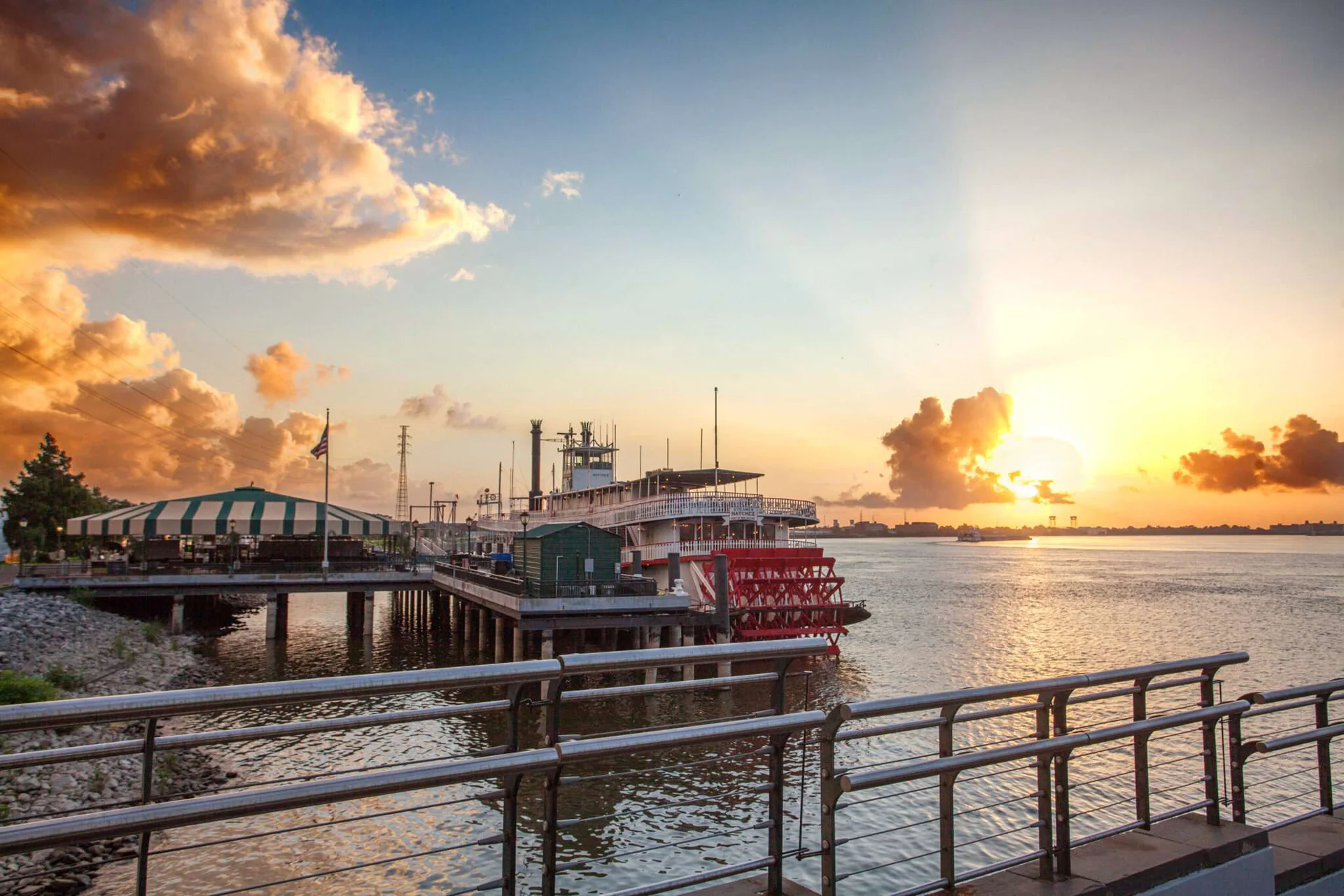
Steamboat on the Mississippi River in New Orleans

7+ Iconic Landmarks

4.8/5 (976 reviews)

French Quarter Walking Tour

Walk 300 years of history through the heart of New Orleans

Price
From $29.99
Duration
2 Hours
Departure Time
10:00 AM & 1:00 PM
Meeting Point
941 Decatur St

About This French Quarter Walking Tour

The French Quarter is older than the United States, but the neighborhood visitors see today is not simply French. Fires, Spanish rebuilding rules, Creole culture, river commerce, immigration, preservation, music, nightlife, and tourism all left visible marks on the streets. A licensed guide helps you read those layers while you are standing in front of them.

The route centers on Jackson Square, St. Louis Cathedral, Royal Street, LaLaurie Mansion, the Old Ursuline Convent, Lafitte's Blacksmith Shop, the French Market, Cafe Du Monde, and Bourbon Street. You will hear documented history, architectural context, local lore, and the practical differences between the Quarter's famous public spaces and its quieter residential blocks.

Expect an easy pace, frequent stops, and enough context to make the rest of your time in the Quarter more useful. The tour works well early in a New Orleans trip because it gives you mental landmarks for restaurants, museums, bars, galleries, and later ghost tours.

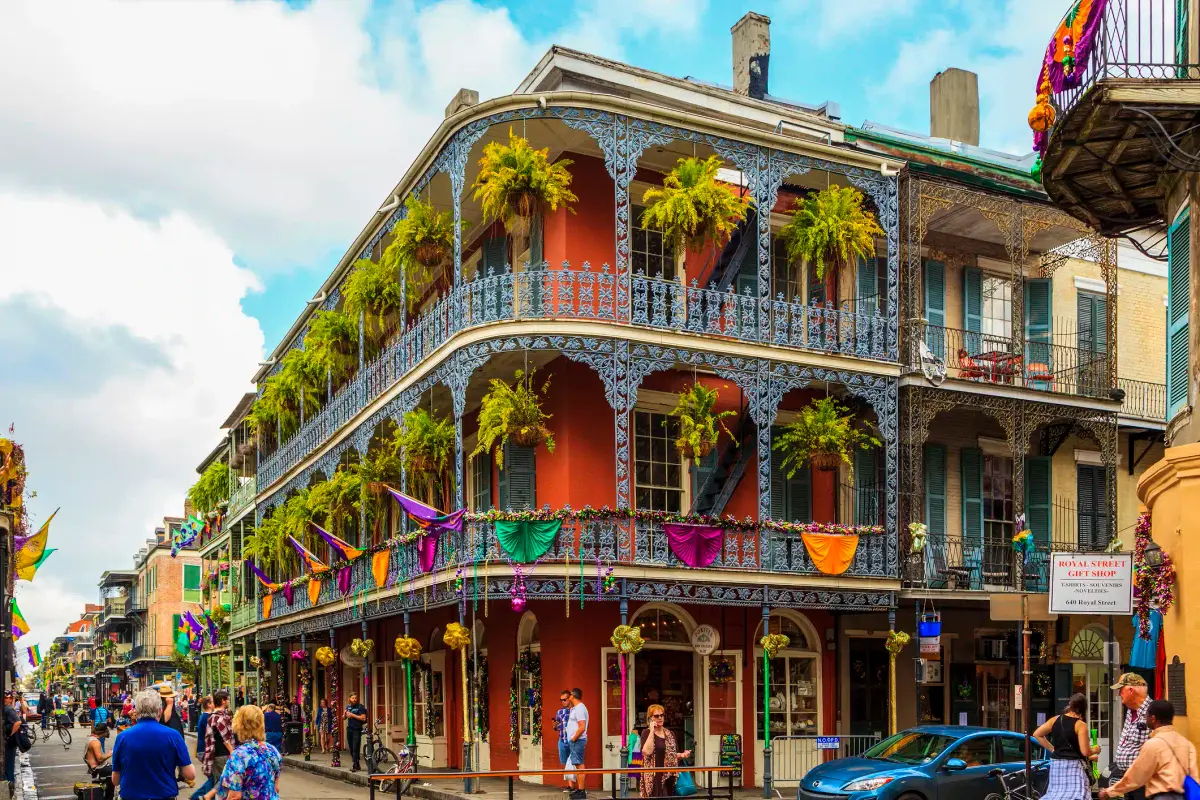
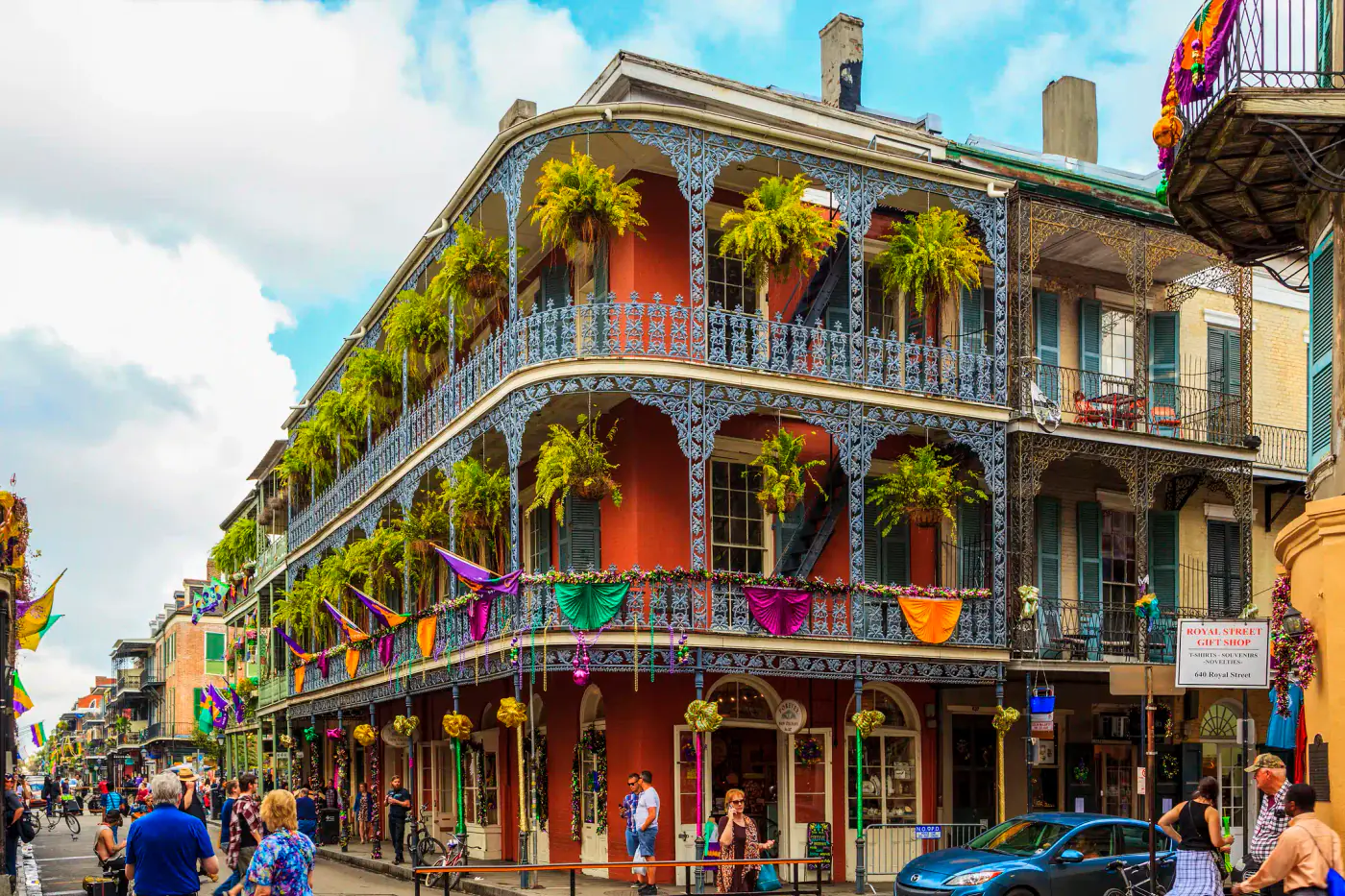
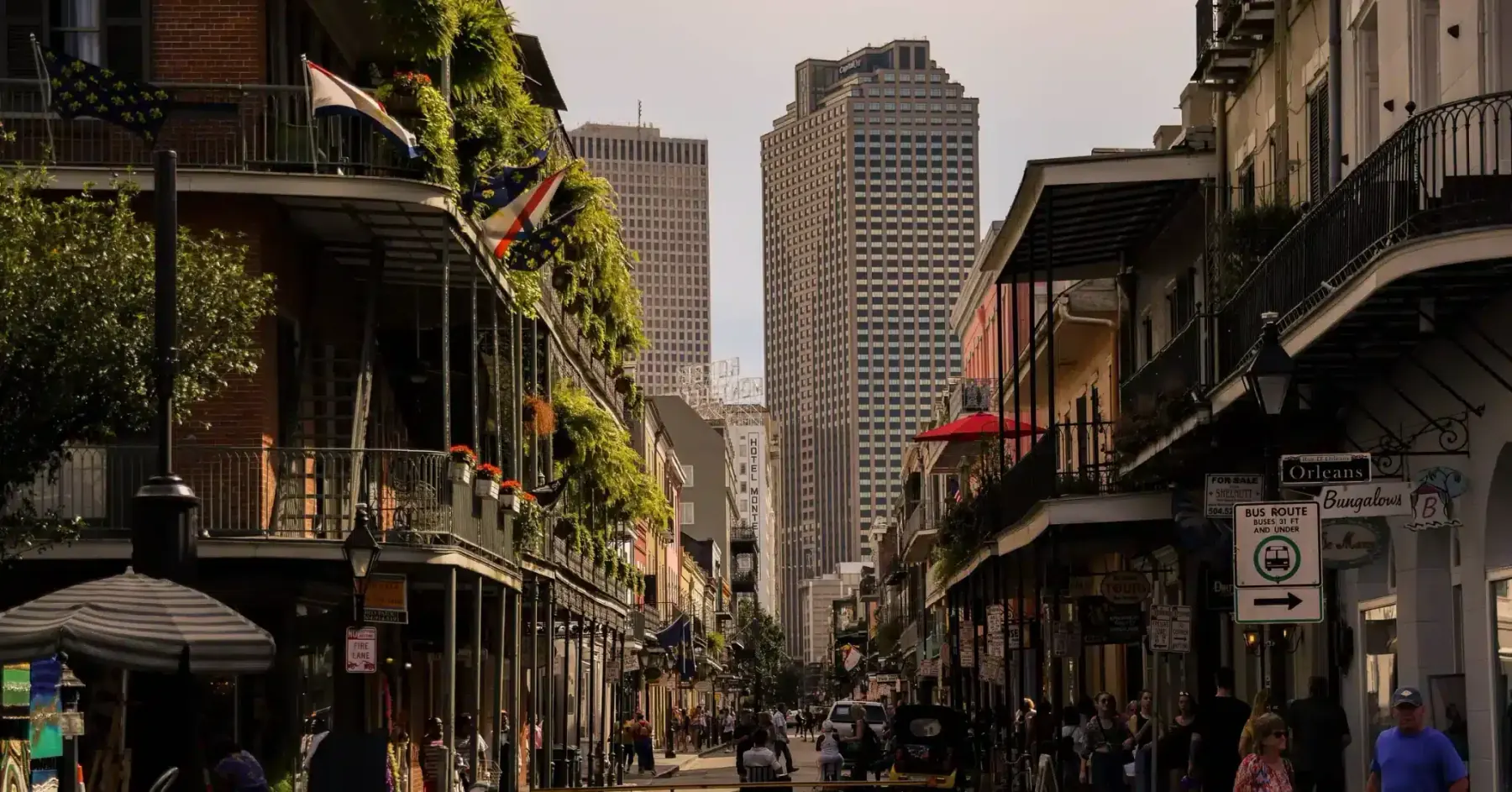
Royal Street balconies and cast-iron galleries in the French Quarter
Royal Street shows the balconies, courtyards, and street life that shape the walking route.

What You'll See on This French Quarter Tour

Walk past the most celebrated landmarks in New Orleans with a licensed guide who brings 300 years of history to life. Here's a preview of your tour itinerary — 7+ stops across the French Quarter's most storied streets.

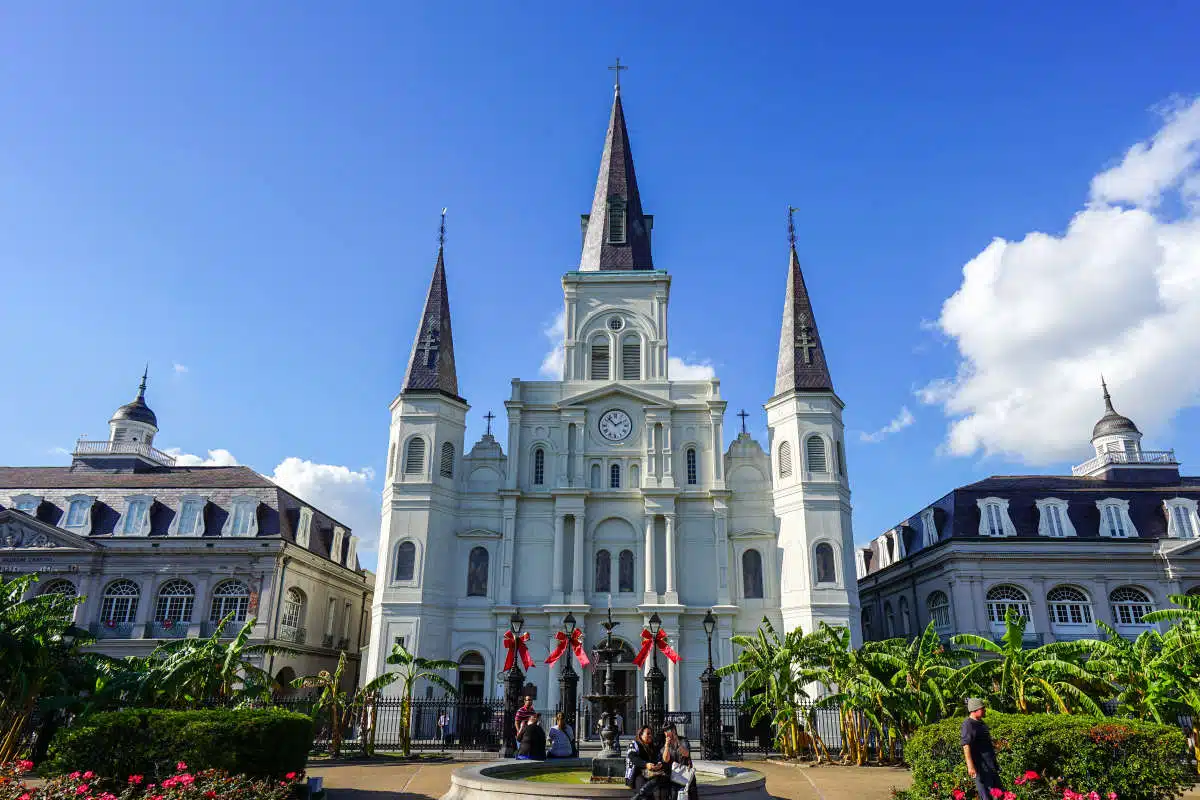
  1. Jackson Square with St. Louis CathedralStop 1

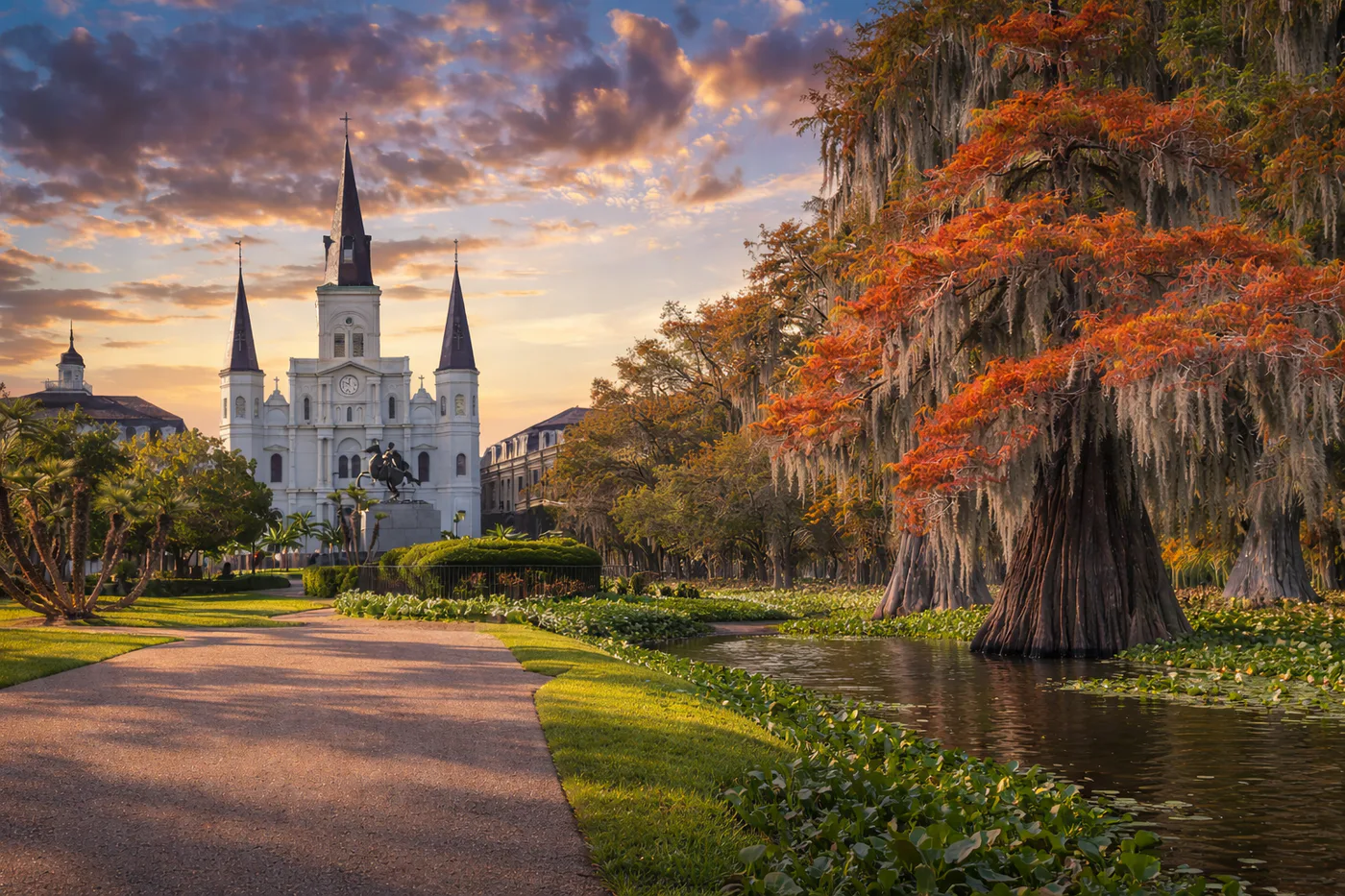
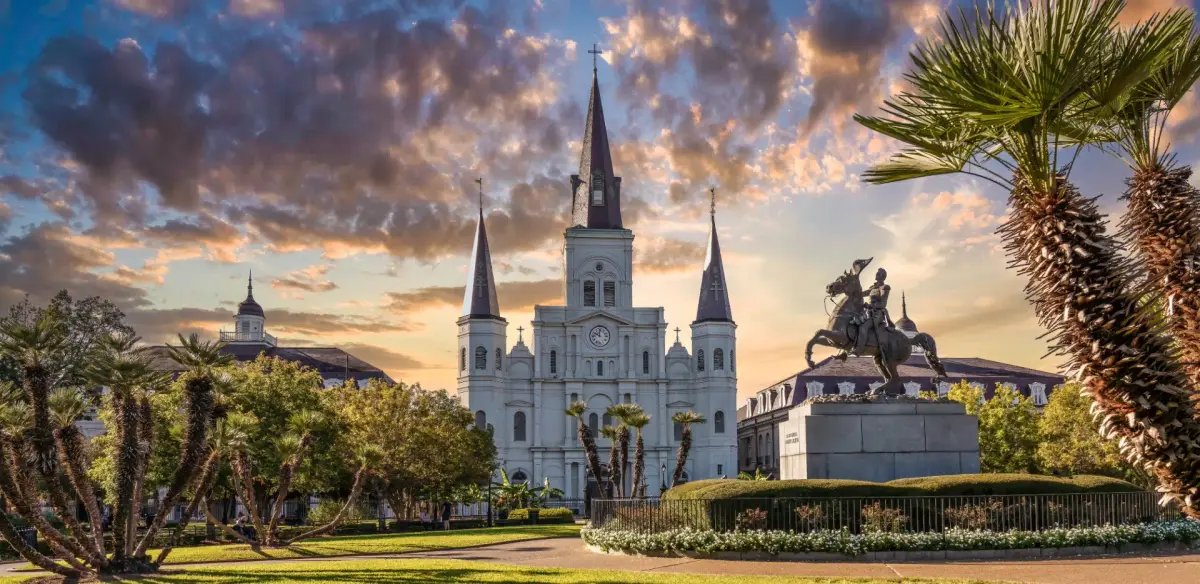
    Jackson Square & St. Louis Cathedral

    Jackson Square is the beating heart of the French Quarter — a historic park framed by the soaring triple steeples of St. Louis Cathedral, the oldest continuously active Roman Catholic cathedral in the United States. Originally laid out in 1721 as the Place d'Armes, the square has witnessed Spanish colonial rule, the Louisiana Purchase, and the rise of New Orleans jazz. Today, artists, musicians, and fortune-tellers fill the pedestrian plaza, and the equestrian statue of Andrew Jackson at its center has stood since 1856. Your guide will explain why the Cabildo and Presbytere flanking the cathedral are among the most important buildings in American history — the Cabildo is where the Louisiana Purchase was signed in 1803.
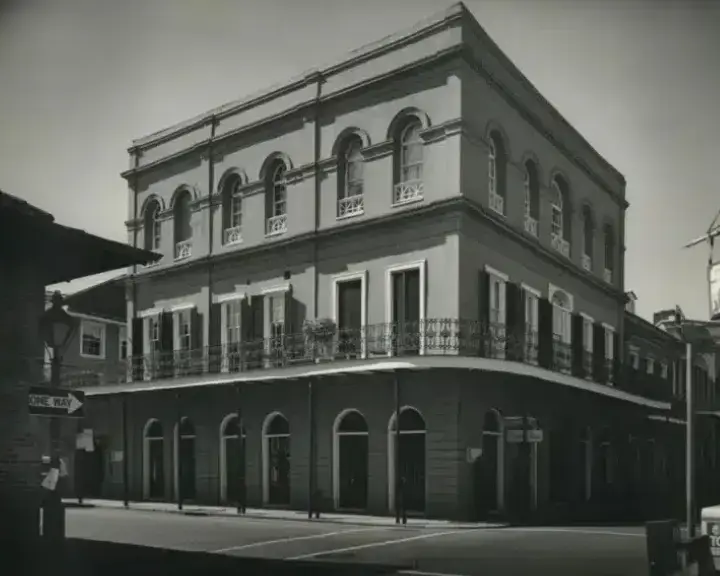
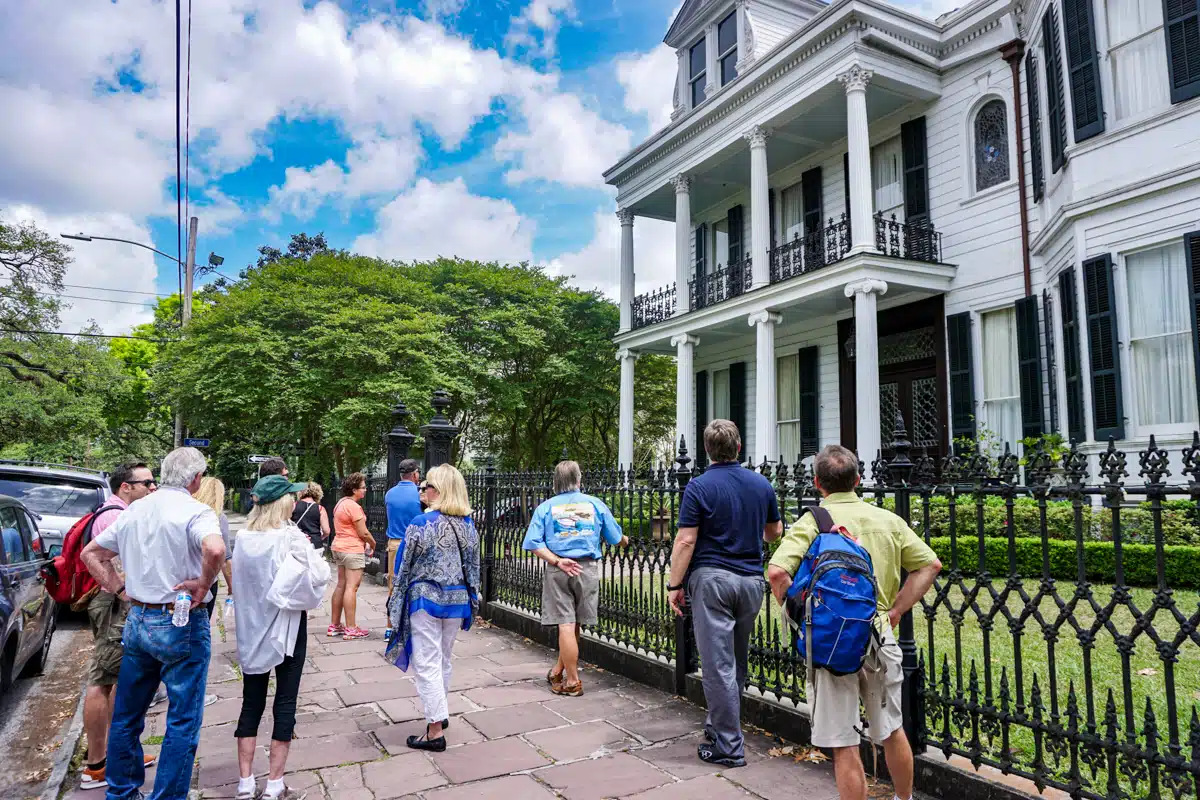
  2. LaLaurie Mansion on Royal Street in the French QuarterStop 2

    The LaLaurie Mansion — New Orleans' Most Haunted House

    Standing at 1140 Royal Street, the LaLaurie Mansion is one of the most notorious addresses in American history. Built in 1832 for Madame Delphine LaLaurie and her husband Dr. Louis LaLaurie, the elegant three-story mansion concealed unspeakable horrors. A fire in 1834 revealed the cruelty inflicted on enslaved people in the attic, sparking public outrage and Madame LaLaurie's dramatic midnight escape to France. Nicolas Cage once owned the mansion; it later became the backdrop for 'American Horror Story: Coven.' Your guide will separate the documented history from the legends that have grown over nearly two centuries — and explain why this address remains the most requested stop on every French Quarter tour.

  3. Royal Street in the French Quarter of New OrleansStop 3

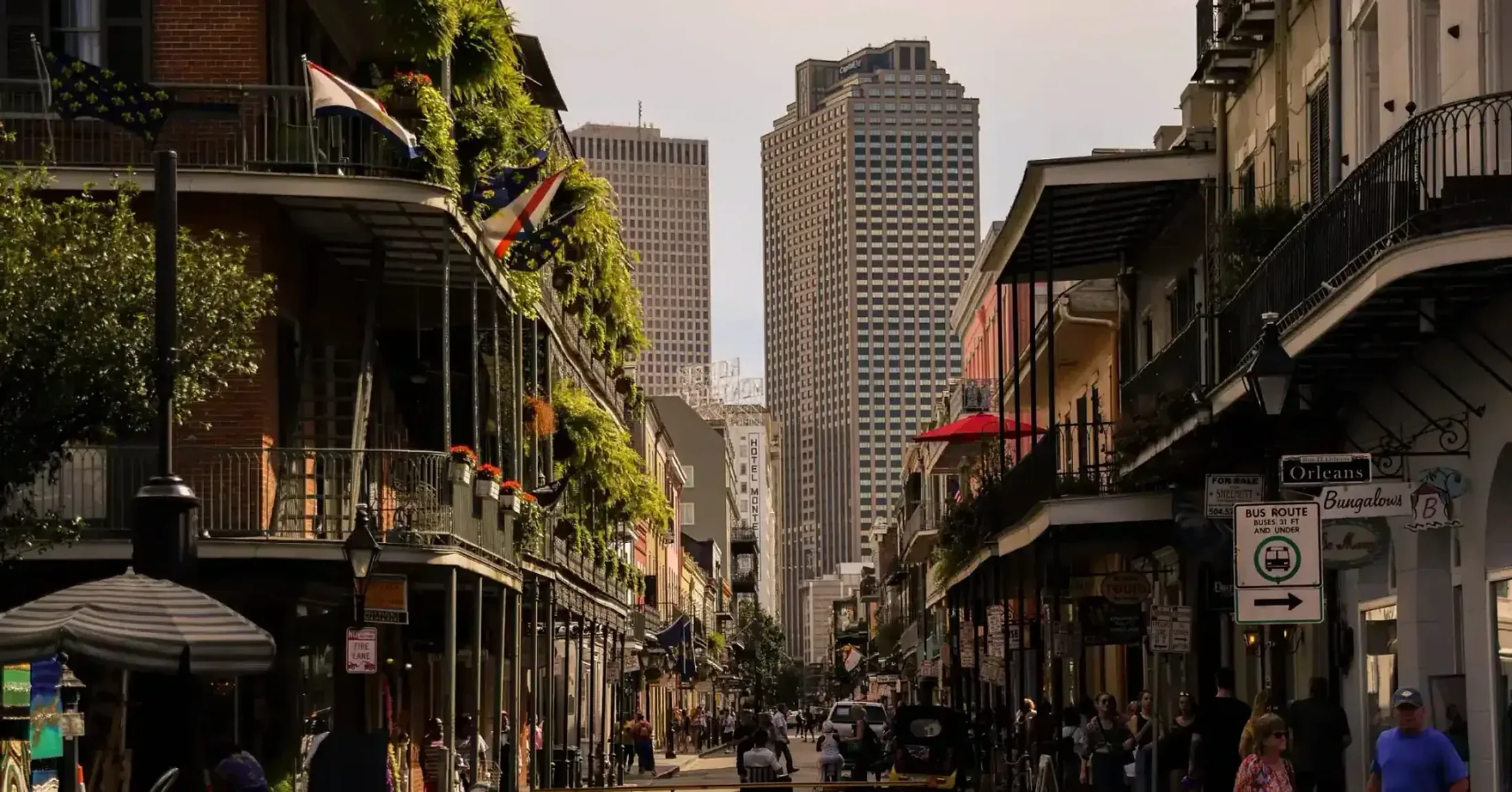
    Royal Street — Art, Antiques & Cast-Iron Architecture

    Royal Street is the French Quarter's cultural spine — a 13-block corridor of antique shops, world-class galleries, and some of the finest cast-iron gallery architecture in the world. Unlike its rowdy neighbor Bourbon Street, Royal Street is a pedestrian haven during the day, with street musicians performing beneath wrought-iron balconies draped in ferns. Your guide will point out architectural details most visitors walk right past: the corn-and-morning-glory cast-iron motif at 915 Royal, the Pedesclaux-Lemonnier House, and the secret interior courtyards hidden behind carriageway passages.

  4. Old Ursuline Convent in New OrleansStop 4

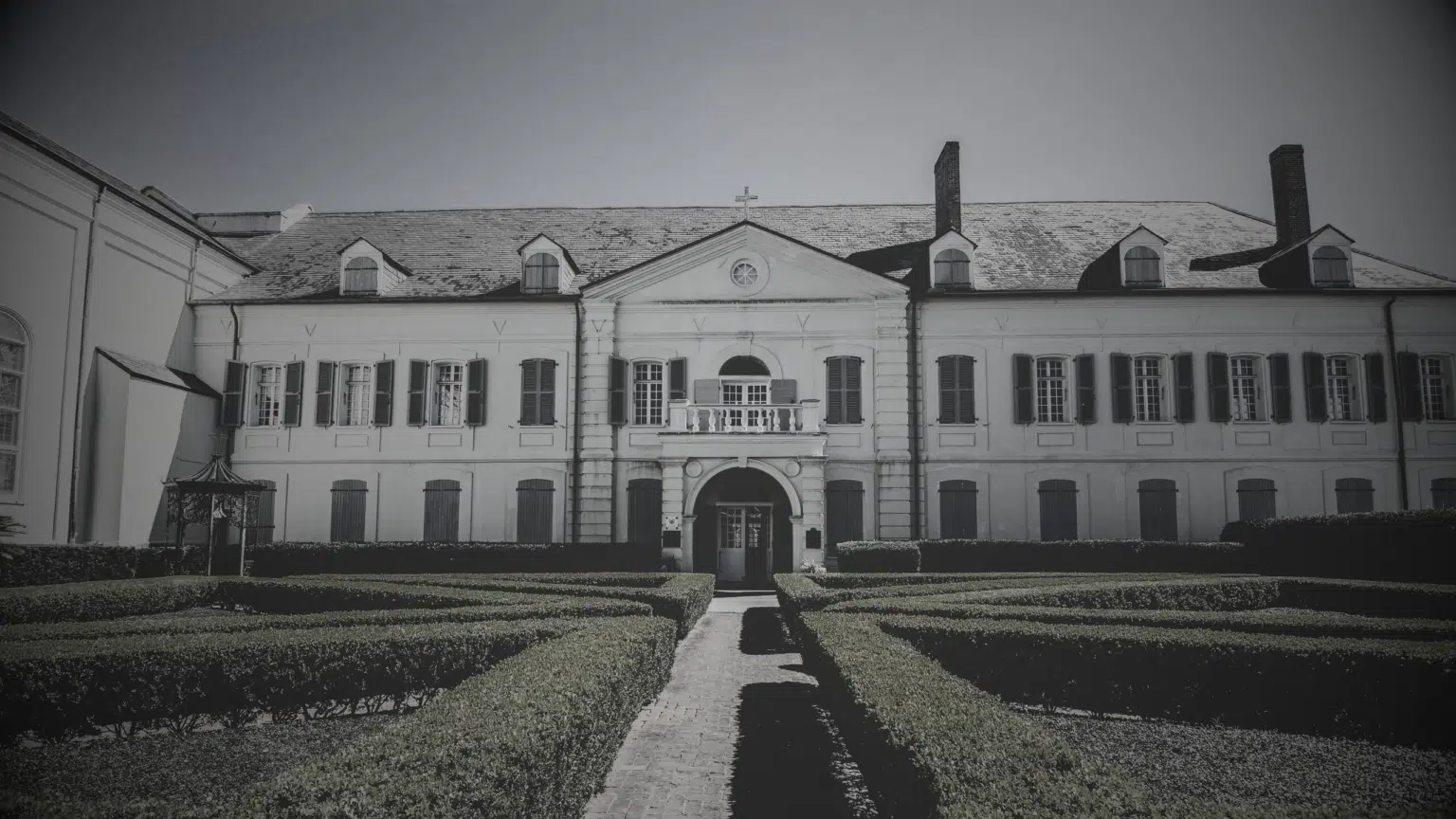
    The Old Ursuline Convent (1745)

    The Old Ursuline Convent on Chartres Street is the oldest surviving building in the Mississippi River Valley and the only remaining example of French Colonial architecture in the French Quarter. The Ursuline nuns arrived in 1727 — before the city had paved streets — to open hospitals, schools for girls (including free education for enslaved and Native American children), and an orphanage. The current structure was completed in 1753 and has served as a convent, archbishop's residence, school, and museum. Its formal gardens and quiet cloisters offer a striking contrast to the bustle of the Quarter just steps away.

  5. Lafitte's Blacksmith Shop on Bourbon StreetStop 5

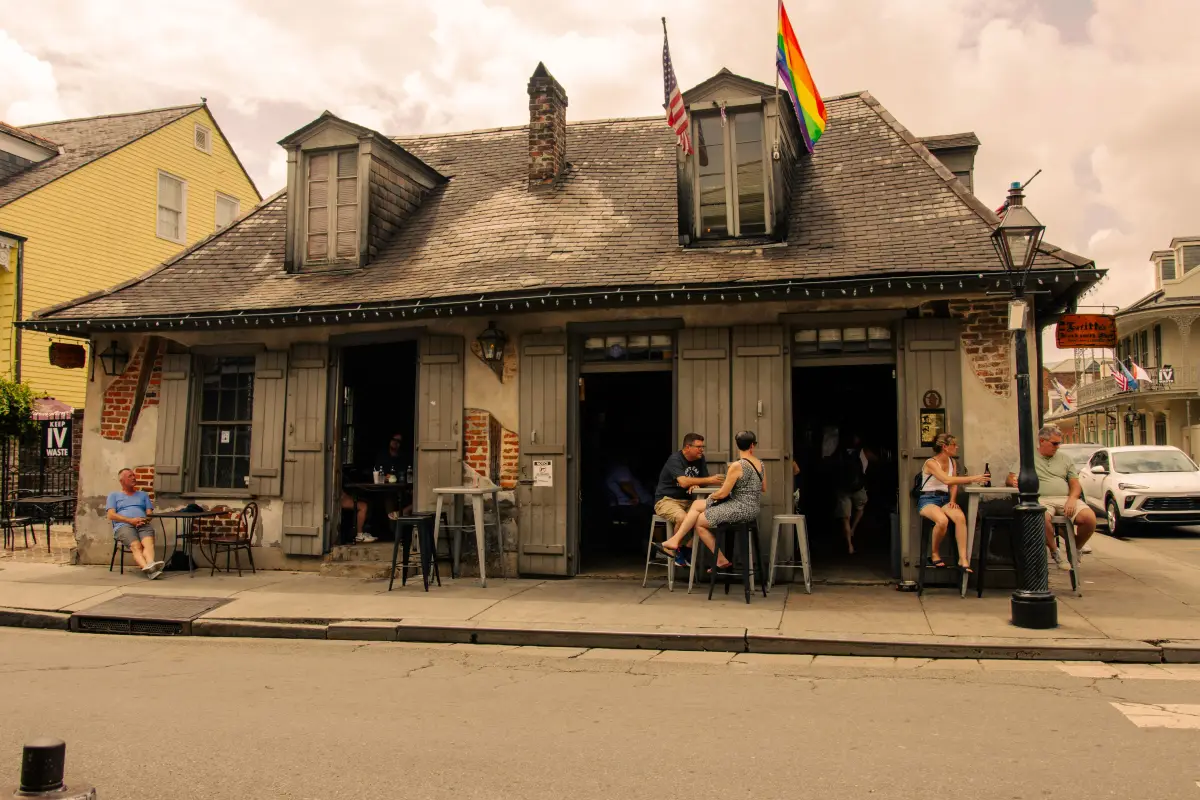
    Lafitte's Blacksmith Shop — The Oldest Bar in America

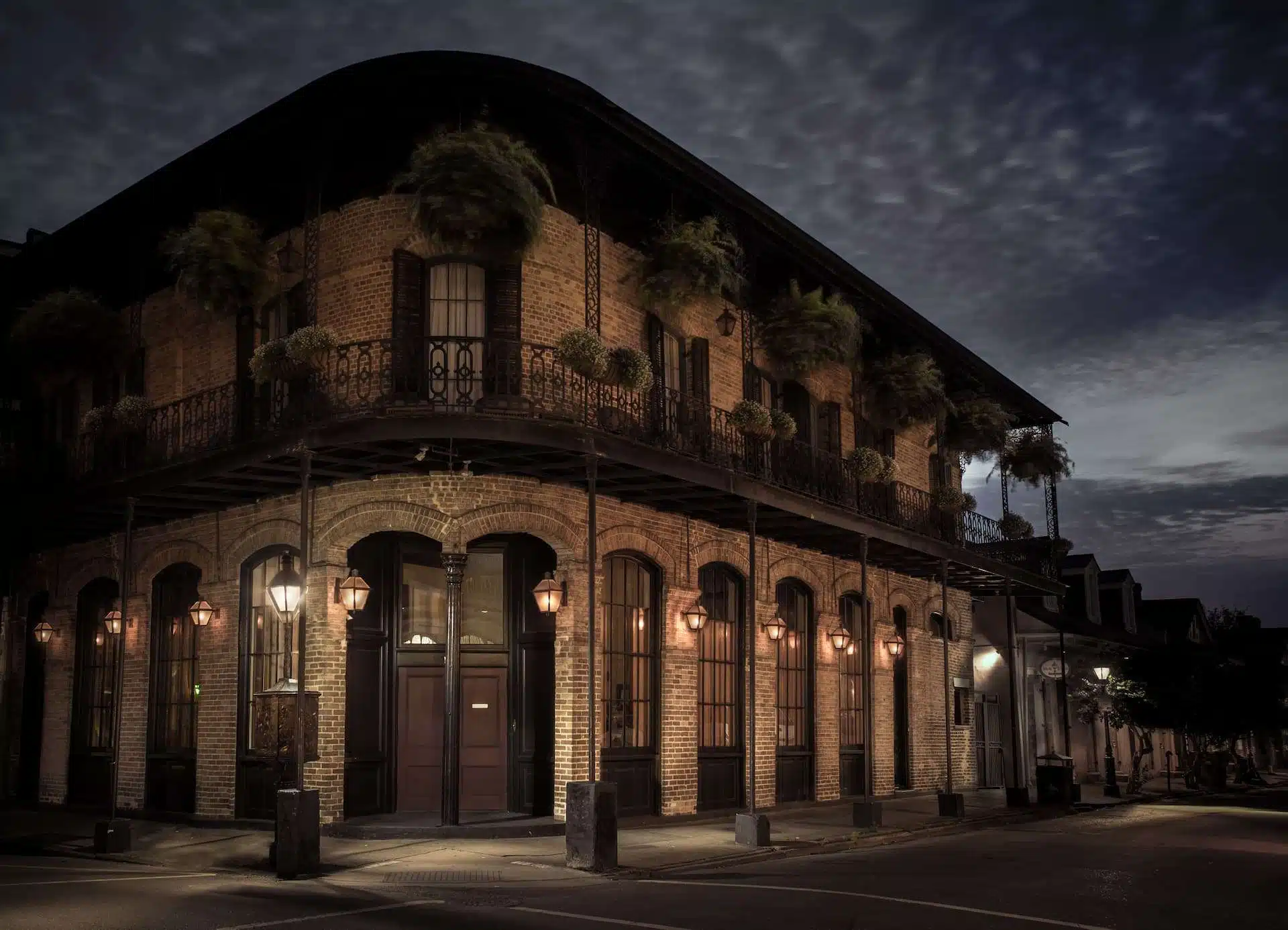
    The weathered brick building at 941 Bourbon Street dates to the 1720s, making it one of the oldest structures in the French Quarter and reputedly the oldest continuously operating bar in the United States. Legend holds that the pirate brothers Jean and Pierre Lafitte used the building as a front for their smuggling operation in the early 1800s. Today, the bar operates by candlelight — no electric lighting in the main room — serving its famous Voodoo Daiquiri. Your guide will share the true story of Jean Lafitte: privateer, hero of the Battle of New Orleans, and one of the most colorful figures in Louisiana history.

  6. Cafe Du Monde coffee stand in the French Market at nightStop 6

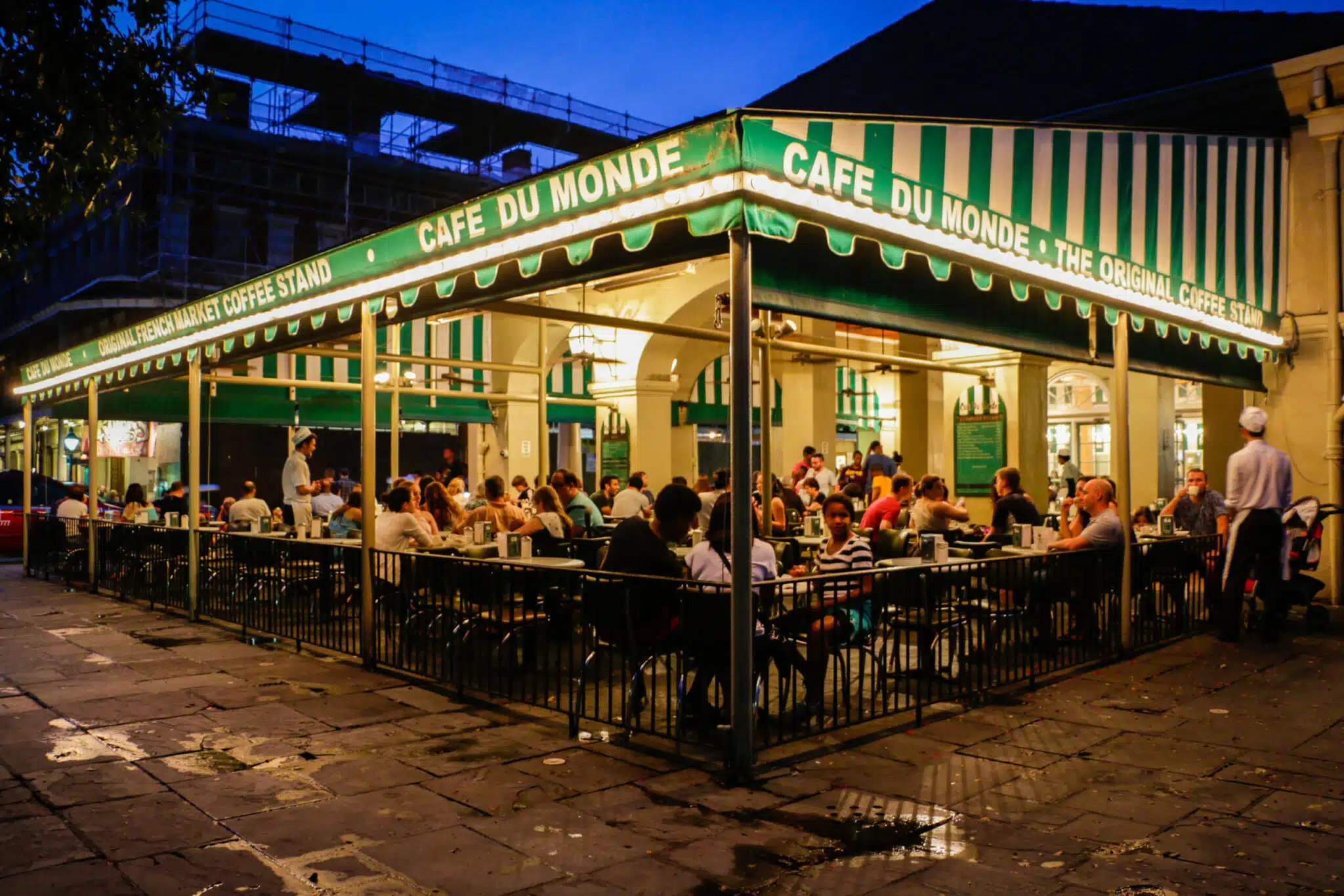
    The French Market & Café Du Monde

    The French Market stretches six blocks along the riverfront and has been a trading post for over 200 years — first as a Choctaw trading ground, then as a colonial market, and now as an open-air bazaar of local art, food, and live music. At its western end sits Café Du Monde, serving café au lait and beignets since 1862. Your guide will explain why this is the one stop you'll want to return to after the tour — and share the locals' secret to eating beignets without covering yourself in powdered sugar (spoiler: there isn't one).

  7. Live music on Bourbon Street in New OrleansStop 7

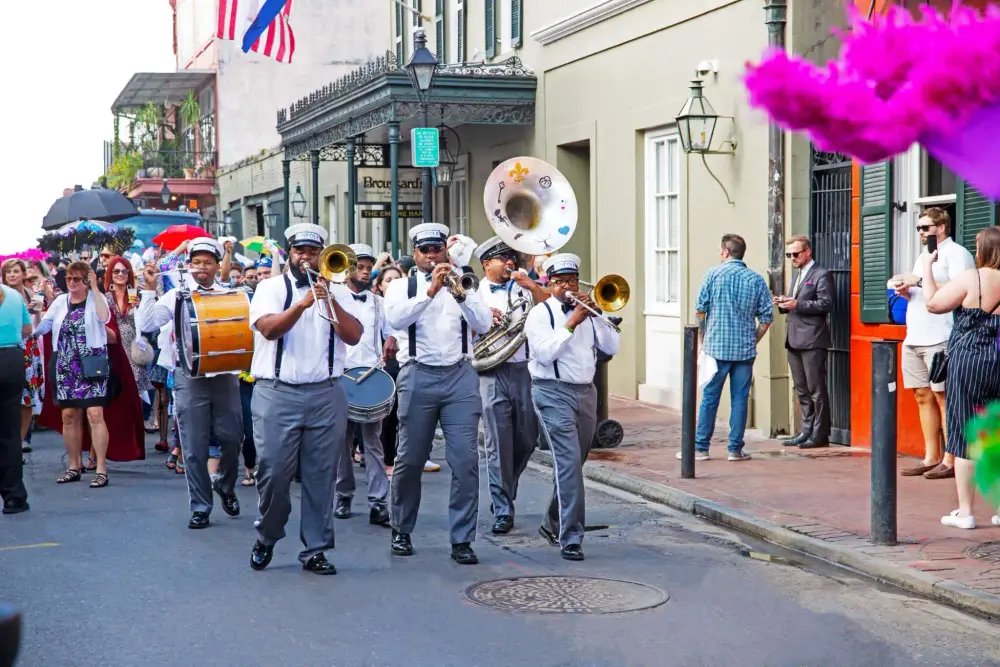
    Bourbon Street — Beyond the Party

    Bourbon Street's reputation for nightlife overshadows its deeper history. Named not for whiskey but for the French royal House of Bourbon, this 13-block stretch has been a residential, commercial, and entertainment corridor since the 1700s. Your guide will take you past the Old Absinthe House (where Mark Twain and Oscar Wilde reportedly drank), point out the original gaslamp fixtures that still light portions of the street, and explain why the French Quarter's famous 'go-cups' exist thanks to a unique Louisiana law.

French Quarter Architecture Up Close

The French Quarter's architectural character is one of the most photographed streetscapes on Earth — but most visitors don't realize that almost nothing in the Quarter is actually French.

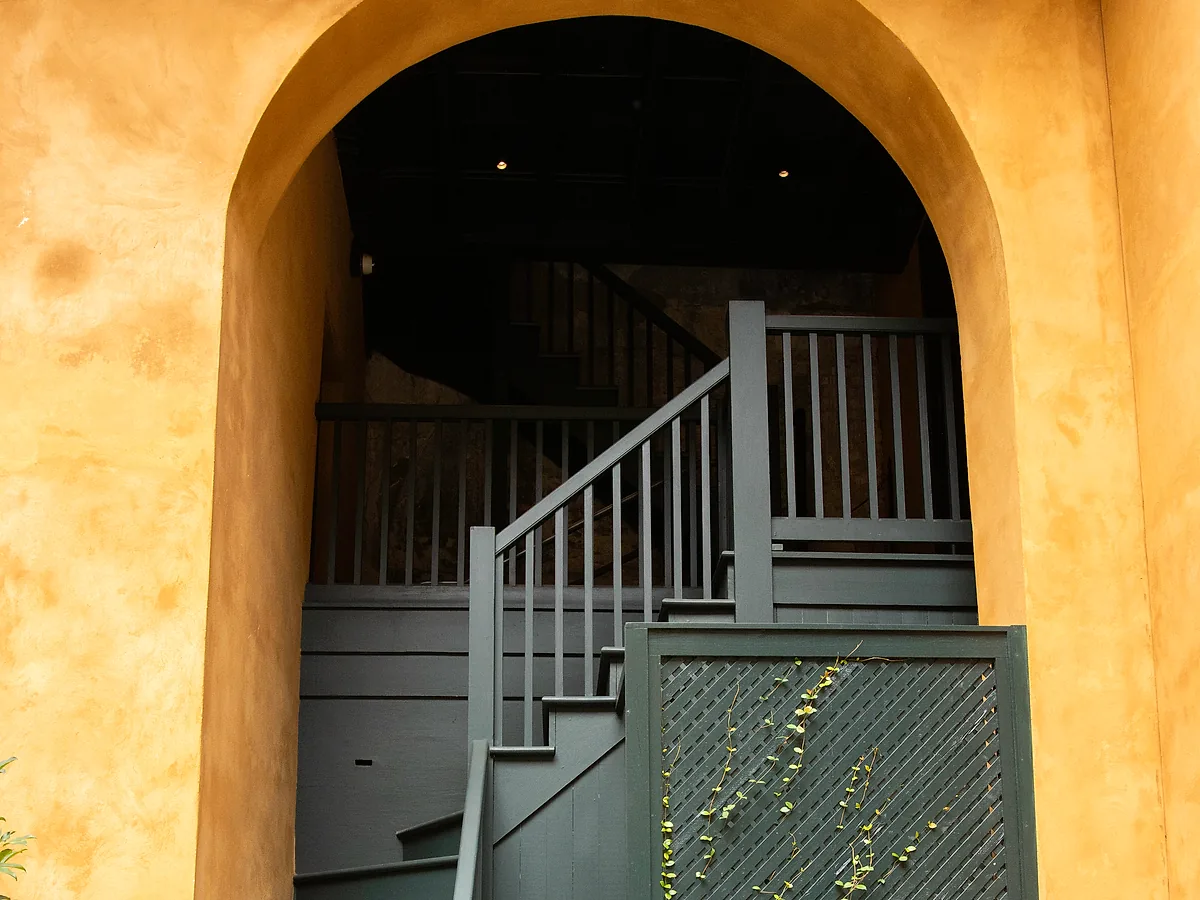
  • Spanish Colonial courtyard archway with stucco walls in the French Quarter

    After the 1788 & 1794 Fires

    Spanish Colonial (Post-Fire Rebuilds)

    Two devastating fires — 1788 and 1794 — destroyed most of the original French colonial buildings. The Quarter was rebuilt under Spanish rule, which is why the signature style features thick stuccoed walls, interior courtyards, and porte-cochère carriageways. Your guide will help you spot the telltale arched doorways, fan-shaped transoms, and the 'entresol' (mezzanine) level that distinguishes Spanish Colonial from later styles.

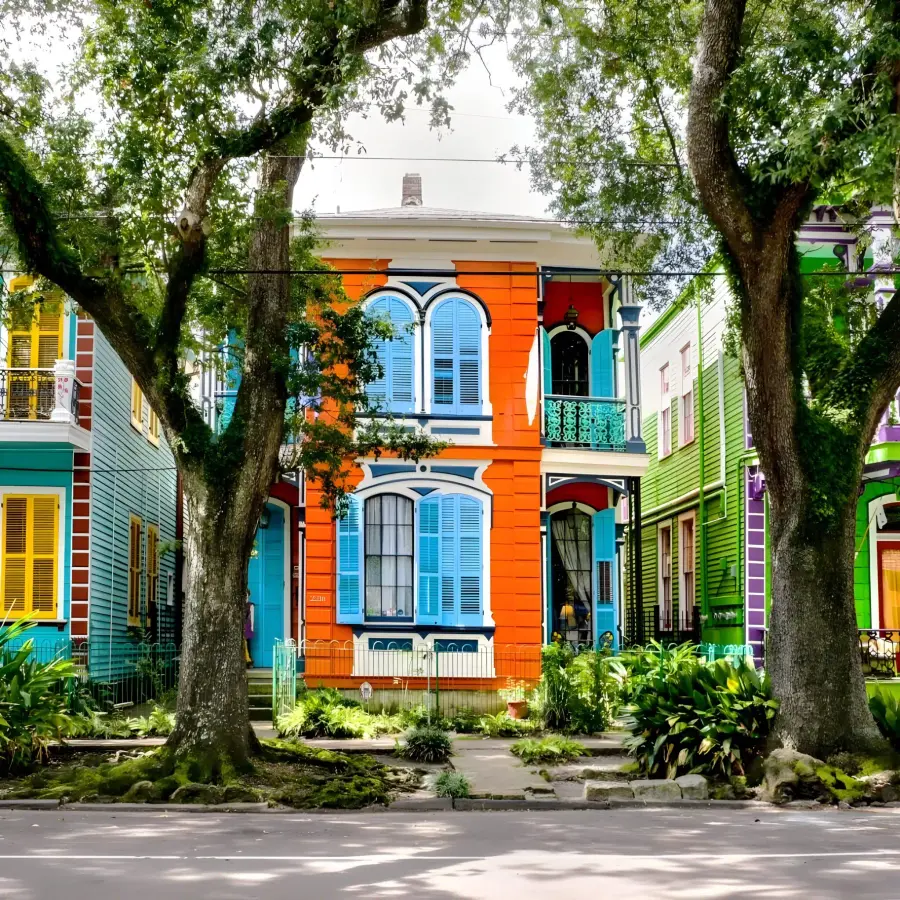
  • Colorful French Quarter house with shutters and courtyard greenery

    19th-Century Creole Streetscape

    Creole Townhouses & Shotgun Cottages

    Creole townhouses — with their commercial ground floors and residential upper stories — define the streetscape of Royal and Chartres streets. 'Shotgun' cottages, named for the straight-line alignment of rooms from front to back, represent the most common residential form in 19th-century New Orleans and directly influenced American residential architecture. Your guide will explain the cultural blend — French, Spanish, African, and Caribbean — that produced these uniquely New Orleans forms.

  • Royal Street with French Quarter balconies and cast iron

    1840s-1850s Cast-Iron Boom

    Cast-Iron Galleries — The French Quarter Signature

    The lacy cast-iron balconies are the most recognizable feature of the French Quarter, but they're actually a 19th-century addition. Mass-produced in local foundries, the galleries were functional (providing shade and rain protection) and decorative (each pattern was unique to the building). The most famous example — the Pontalba Buildings on Jackson Square — were built in 1849 and are the oldest apartment buildings in North America. Your guide will teach you to tell the difference between cast iron and the earlier wrought iron by looking at the complexity of the patterns.

300 Years of French Quarter History

The French Quarter, or Vieux Carre, is the original city of New Orleans and one of North America's most intact historic neighborhoods.

The Original Settlement

The French Quarter — known locally as the Vieux Carré ('Old Square') — was established in 1718 by Jean-Baptiste Le Moyne de Bienville as the original settlement of New Orleans. In the three centuries since, it has survived French and Spanish colonial rule, the Louisiana Purchase (1803), the Civil War, Reconstruction, near-demolition by mid-20th century highway planners, and the devastation of Hurricane Katrina in 2005.

Layers of Culture

What makes the Quarter remarkable isn't just its survival — it's the layering of cultures. French settlers, Spanish administrators, enslaved Africans, free people of color, Haitian refugees, Italian immigrants, and Cajun transplants all left their mark on the architecture, cuisine, music, and traditions you'll experience on this tour.

Preservation to Today

The Vieux Carré Commission, established in 1936, was the second historic preservation commission in the United States and has protected the Quarter's architectural integrity for nearly a century. Today, the French Quarter is a National Historic Landmark and one of the most intact 18th/19th-century urban neighborhoods in North America.

Why Book Your French Quarter Tour with NOLWT

The French Quarter is easy to wander and hard to understand. A guided walk gives the context, sequence, and local judgment that a map cannot provide.

  • Licensed expert guide

    NOLWT
    Self-guided
    Audio tour
    Bus tour
    ✅ (on bus)
  • Ask questions in real time

    NOLWT
    Self-guided
    Audio tour
    Bus tour
    Limited
  • Walk inside the Quarter

    NOLWT
    Self-guided
    Audio tour
    Bus tour
  • Hidden courtyards & details

    NOLWT
    Self-guided
    Audio tour
    Bus tour
  • Small group (max 20)

    NOLWT
    Self-guided
    N/A
    Audio tour
    N/A
    Bus tour
    ❌ (50+)
  • Local stories & humor

    NOLWT
    Self-guided
    Audio tour
    Scripted
    Bus tour
    Scripted
  • Rated 4.8★ (976 reviews)

    NOLWT
    Self-guided
    N/A
    Audio tour
    Varies
    Bus tour
    Varies
  • Price

    NOLWT
    $29.99/person
    Self-guided
    Free
    Audio tour
    $15–25
    Bus tour
    $40–65

976 Five-Star Reviews from Real Guests

Our French Quarter Walking Tour is rated 4.8 out of 5 stars based on 976 verified guest reviews across TripAdvisor, Google, and Yelp. Awarded the TripAdvisor Travelers' Choice in 2024.

  • M
    Mary Browna year ago
    Google
    Omar gave us an awesome walking tour of the French Quarter. He introduced us to several spots and locations that we can check out on our own as well!!
  • K
    Kappu Srivats2 years ago
    Google
    Our tour guide was Jane Deau. She gave a fantastic tour of the city from Mississippi River to Katrina floods, Joan of arc, to bourbon street! She was very thorough with the local history! Very friendly and I took many photos of the French quarter and learned much about the city! Thanks for organizing this great walking tour!
  • B
    Brian Babcock2 years ago
    Google
    Excellent walking tour of the French Quarter. Our guide was easy to follow and easy to hear. Very knowledgeable of the history of the city, but was also able to answer random questions.

Licensed Guides, Local Context & Easy Booking

  • Licensed Local Guides

    Guides are licensed and trained to connect architecture, colonial history, preservation, culture, and local lore without turning every stop into a myth.

  • Landmarks With Context

    You see the major names, but the value is understanding how Jackson Square, Royal Street, Decatur Street, Bourbon Street, and the riverfront fit together.

  • Easy Direct Booking

    Use the production booking system, receive confirmation details, and check in with NOLWT near 941 Decatur Street before heading into the Quarter.

Frequently Asked Questions About the French Quarter Tour

How long is the French Quarter Walking Tour?

The tour lasts approximately 2 hours and covers about 1.2 miles at a comfortable walking pace. We make frequent stops at landmarks, so the walk itself is easy and suitable for all fitness levels.

What landmarks will we see on the French Quarter tour?

You'll visit 7+ landmark stops including Jackson Square, St. Louis Cathedral, the LaLaurie Mansion, Royal Street, the Old Ursuline Convent, Lafitte's Blacksmith Shop, the French Market, Café Du Monde, and Bourbon Street. Your guide tailors the route based on the group's interests and conditions.

How much does the French Quarter Walking Tour cost?

Adult tickets are $29.99 and children under 12 are $18.99.

Do I need to book in advance?

Yes — we recommend booking at least 24 hours ahead, especially during peak season (October–May) and major events like Mardi Gras, Jazz Fest, and French Quarter Festival. Tours frequently sell out on weekends.

Where does the French Quarter Walking Tour start?

The tour begins at 941 Decatur Street near Jackson Square in the French Quarter. Your exact meeting point and guide identification details are included in your booking confirmation email. We recommend arriving 10 minutes early.

Is the tour wheelchair-accessible?

The French Quarter's sidewalks are historic and some are uneven, but the tour route is primarily flat with no stairs. Please contact us in advance if you have specific accessibility needs and we'll accommodate your route.

What happens if it rains?

Tours run rain or shine — this is New Orleans! We provide a modified route with more covered stops during inclement weather. In the event of severe weather (thunderstorms, tropical storms), we'll reschedule or provide a full refund.

Are your guides licensed?

Yes — all NOLWT guides are licensed by the City of New Orleans and undergo extensive training in French Quarter history, architecture, cultural heritage, and storytelling. Many have lived in New Orleans for decades.

Is this tour suitable for children?

Absolutely. The tour is family-friendly. Our guides adjust storytelling for younger audiences — children typically love the pirate history, ghost stories, and the beignets at Café Du Monde after the tour.

What's the difference between the French Quarter tour and the Ghost Tour?

The French Quarter Walking Tour is a daytime history and architecture tour covering 7+ landmarks in the Vieux Carré. The Ghost Tour is an evening tour focused on haunted locations, true crime, and supernatural New Orleans. Many guests book both — they cover different ground and different stories.

Can I take photos during the tour?

We encourage photography! Your guide will point out the best angles and hidden photo spots at each landmark. The French Quarter is one of the most photogenic neighborhoods in America.

How is this different from a self-guided French Quarter tour?

A licensed guide brings stories, context, and insider knowledge you won't find in any guidebook or app. We'll take you past hidden courtyards, point out architectural details at eye level, and share the oral history that makes the Quarter come alive. Self-guided walks give you geography; guided walks give you understanding.

Getting There & What to Expect

Meeting Point
Check in at or near the NOLWT visitor center at 941 Decatur Street in the French Quarter. Your confirmation email includes the exact meeting point for your departure.Get directions
Parking
Street parking is limited in the French Quarter. We recommend rideshare (Uber/Lyft), the Riverfront Streetcar, or public garages on N. Peters Street or Decatur Street.Find nearby parking
Schedule
Tours run daily at 10:00 AM and 1:00 PM.
Duration
Approximately 2 hours.
Distance
~1.2 miles (easy walking pace)
What to Wear
Comfortable walking shoes. Sunscreen, a hat, and water recommended — especially in summer.
Accessibility
Route is primarily flat with no stairs. Contact us for accommodations.
Royal Street balconies and galleries in the French Quarter

Reserve Your French Quarter Walking Tour

Walk the Vieux Carre with a licensed local guide who connects the Quarter's landmarks, architecture, and street-level stories into one clear New Orleans history route.